
📍 Introduction
Website downtime can lead to lost revenue, damaged credibility, and frustrated users. Ensuring your website remains accessible 24/7 is crucial for business success. This guide explores how to monitor website uptime and prevent unexpected downtime using best practices and tools.
1️⃣ Why Website Downtime is a Major Issue
Downtime negatively impacts SEO, user experience, and business reputation.
🔹 Consequences of Website Downtime:
✔ Lost Revenue – Every second of downtime can mean lost sales.
✔ Poor User Experience – Visitors may leave and never return.
✔ SEO Penalties – Search engines demote unreliable sites.
✔ Security Risks – Vulnerable sites can be exploited by hackers.
📌 Real-World Data: A 1-hour outage can cost eCommerce sites up to $500,000 in lost revenue (Gartner, 2024).
2️⃣ How to Monitor Website Downtime
Using monitoring tools ensures real-time alerts when downtime occurs.
📊 Best Website Monitoring Tools:
✔ UptimeRobot – Free & paid monitoring options.
✔ Pingdom – Real-time monitoring with instant alerts.
✔ Google Search Console – Detects crawl and indexing issues.
✔ StatusCake – Advanced monitoring with performance insights.
📌 Action Step: Set up automated monitoring to receive instant downtime notifications.
3️⃣ How to Prevent Website Downtime
Reducing downtime involves proactive server management and security enhancements.
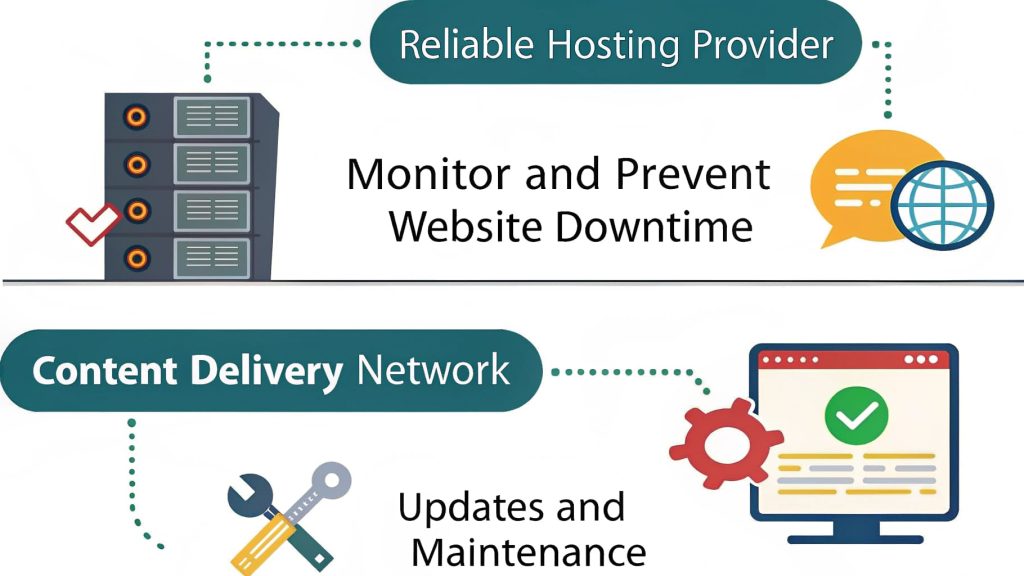
🎯 1. Choose a Reliable Hosting Provider
✔ Opt for cloud hosting with 99.9% uptime guarantees.
✔ Use dedicated or managed hosting for business-critical websites.
✔ Ensure hosting includes backup power and failover solutions.
🎯 2. Implement a Content Delivery Network (CDN)
✔ Distributes traffic across multiple servers globally.
✔ Reduces strain on primary servers, improving site speed.
✔ Enhances DDoS protection to prevent attacks.
🎯 3. Regularly Update & Maintain Your Website
✔ Update plugins, themes, and CMS software to prevent vulnerabilities.
✔ Test backups frequently to ensure quick recovery.
✔ Conduct regular security audits to identify weak points.
📌 Real-World Data: Websites that conduct monthly maintenance experience 50% fewer outages (HubSpot, 2024).
🚀 Conclusion
Preventing website downtime requires a combination of proactive monitoring, reliable hosting, and regular maintenance. By investing in website uptime monitoring tools and security best practices, businesses can ensure a seamless online experience for visitors.
Preventing website downtime is a crucial aspect of maintaining a reliable online presence. By focusing on website maintenance essentials, such as proactive monitoring, secure hosting, and regular updates, businesses can avoid disruptions and provide visitors with a smooth, uninterrupted experience.
📌 Next Steps:
✅ Set up real-time website monitoring.
✅ Upgrade to high-availability hosting with built-in failovers.
✅ Need assistance? Contact our Website Maintenance Services team today!